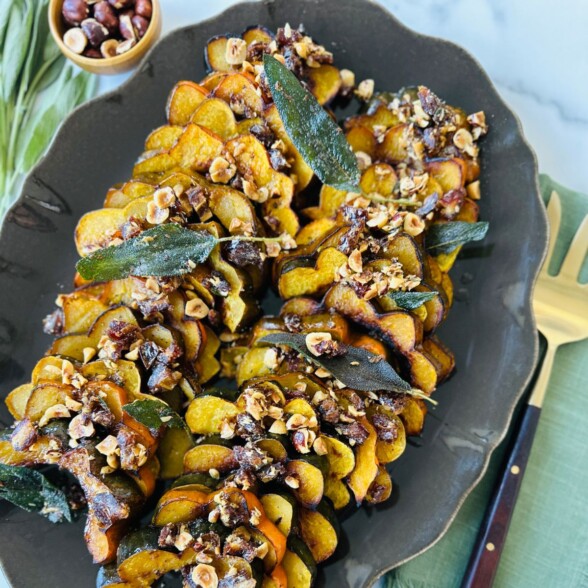
Why You’ll Love This Recipe
If you want to know how to roast acorn squash, this recipe is for you. Every fall, I look forward to the comfort of roasted vegetables, and this easy acorn squash recipe is one I come back to again and again. The process is simple – slice, season, and roast until beautifully tender and caramelized. The result is a side dish that feels cozy and elevated all at once!
Unlike other versions that rely only on sweetness, this recipe balances flavors perfectly – savory roasted acorn squash with just enough maple syrup to enhance its natural sugars. The brown butter, toasted hazelnuts, and crisp sage leaves take it over the top, creating layers of flavor and texture that pair beautifully with everything from roasted chicken to a hearty grain salad.
If you enjoy fall sides like Roasted Fall Vegetables with Italian Agrodolce, you’ll love how this recipe brings the same seasonal warmth to your table, with just a few simple ingredients and techniques.
Ingredients You’ll Need
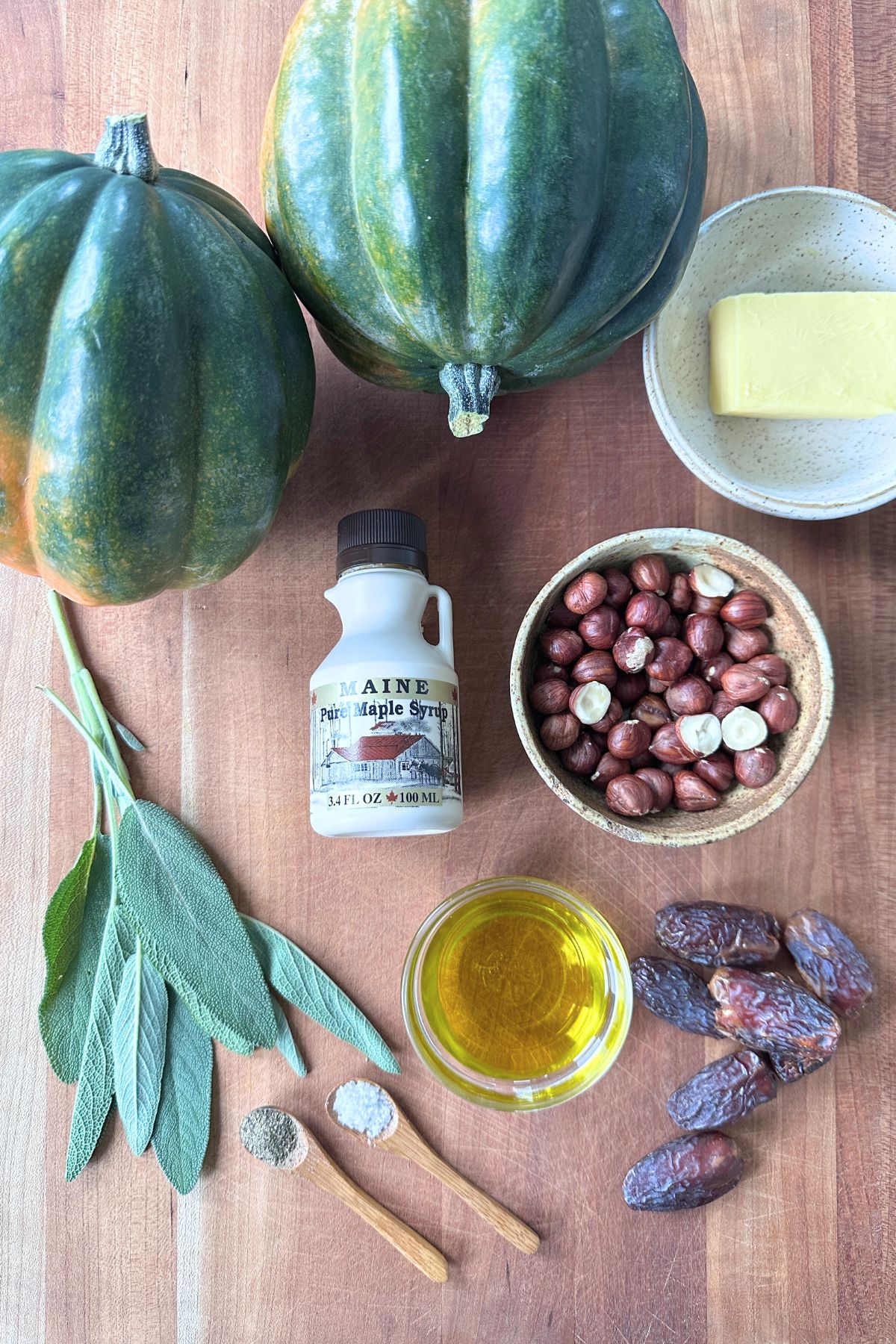
- Acorn squash: Choose medium-sized squash with firm skin and no soft spots. Cutting crosswise creates beautiful scalloped edges, while wedges offer more caramelized surface area.
- Oil: Olive, avocado, or coconut oil work equally well for roasting. Each gives a slightly different flavor; use your favorite.
- Maple syrup: Encourages caramelization and adds a subtle sweetness. Skip it for a fully savory version.
- Butter: Unsalted or plant-based butter adds richness; it’s the base for the brown butter sauce.
- Sage: Fresh leaves crisp up beautifully in the hot butter, infusing it with savory aroma.
- Hazelnuts: Toasted in the butter for a crunchy, nutty finish.
- Golden raisins or dates: Add gentle sweetness that complements the butter and sage.
- Salt and pepper: Essential for balance and depth of flavor.
This combination creates that ideal caramelized acorn squash texture, tender on the inside with crisp, golden edges and a buttery, aromatic finish that tastes like fall!
How to Make Roasted Acorn Squash
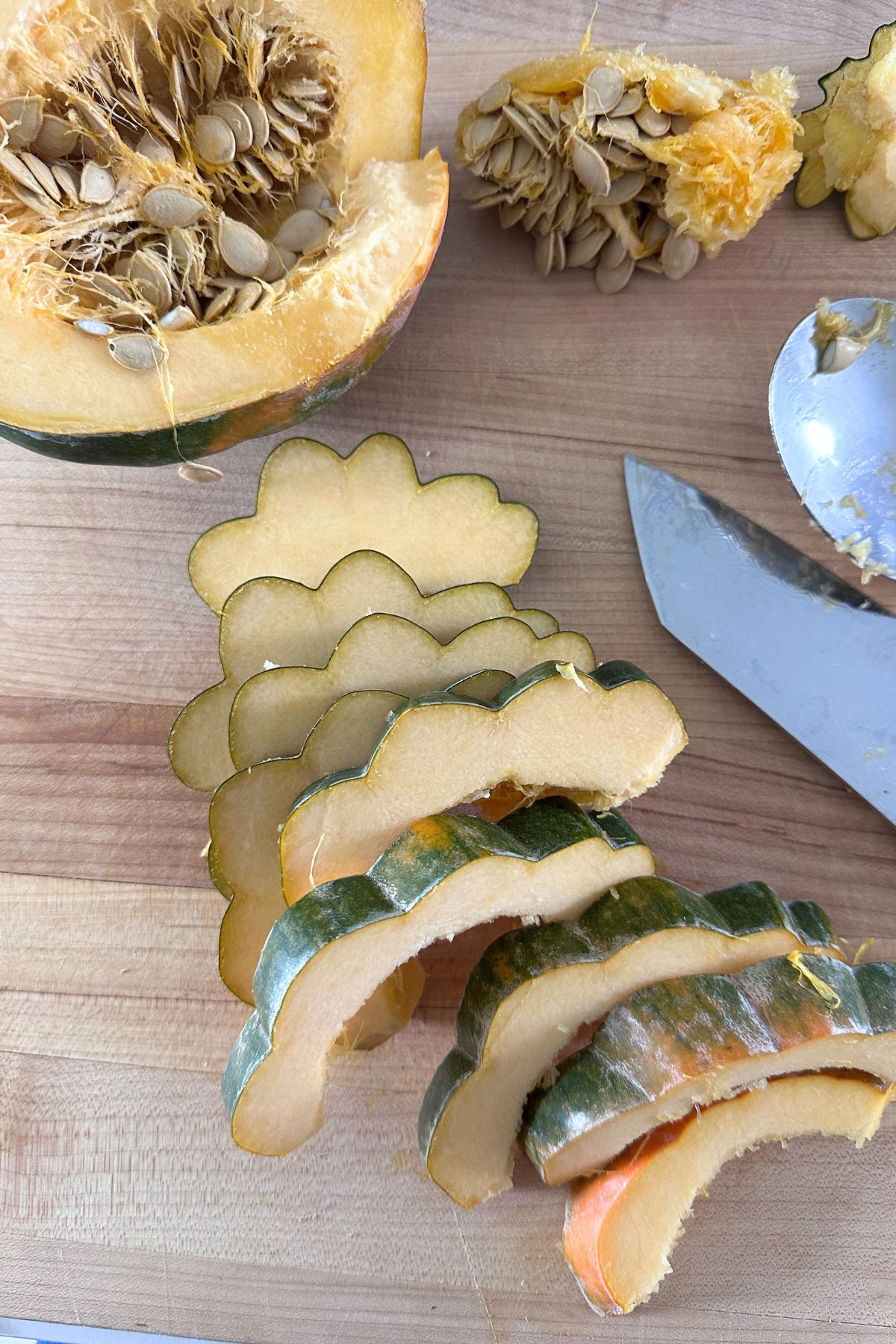
Step 1: Preheat your oven to 450°F and line one large (or two smaller) sheet pans with parchment paper. This ensures even roasting and easy cleanup. Trim the tough stem ends, then cut each acorn squash in half lengthwise. Scoop out the seeds, and slice into ¾-inch wedges. For a more decorative look, cut crosswise to create scalloped rings.
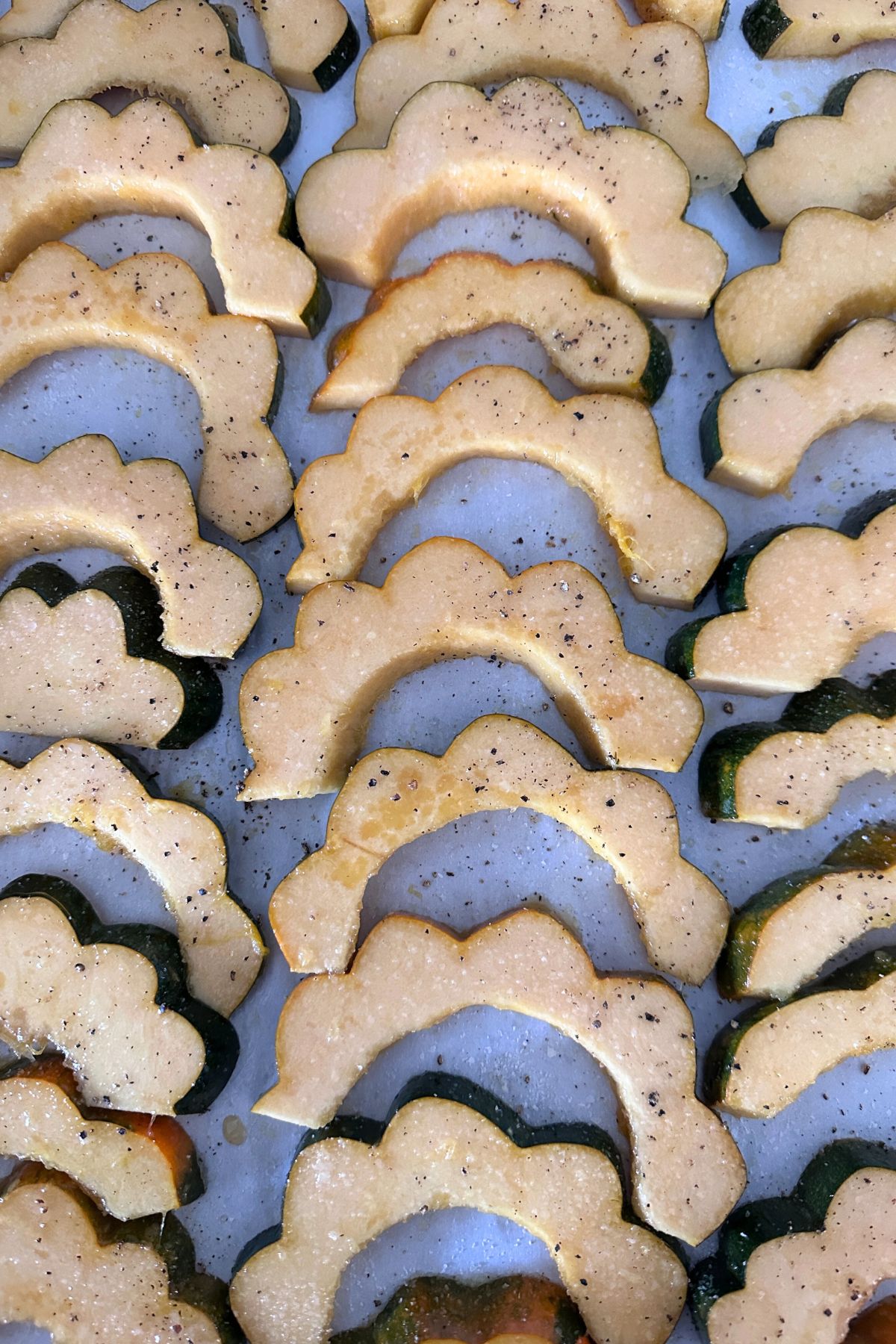
Step 2: In a large bowl, toss the squash with olive oil (or your oil of choice), maple syrup, salt, and pepper until evenly coated. Arrange the pieces cut side down in a single layer.
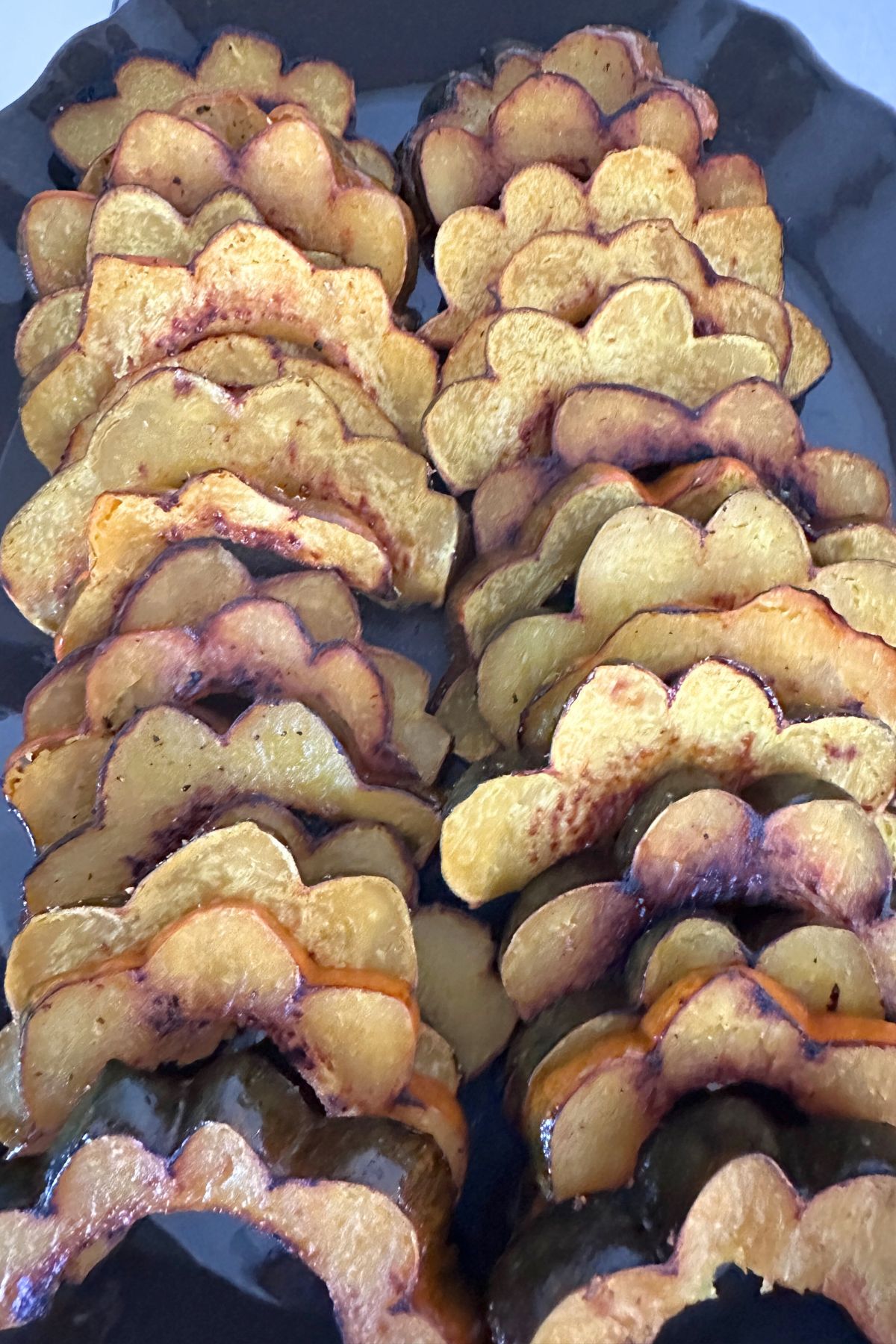
Step 3: Roast for 25-35 minutes, flipping once halfway through. The squash is ready when the edges are golden and the centers are tender.
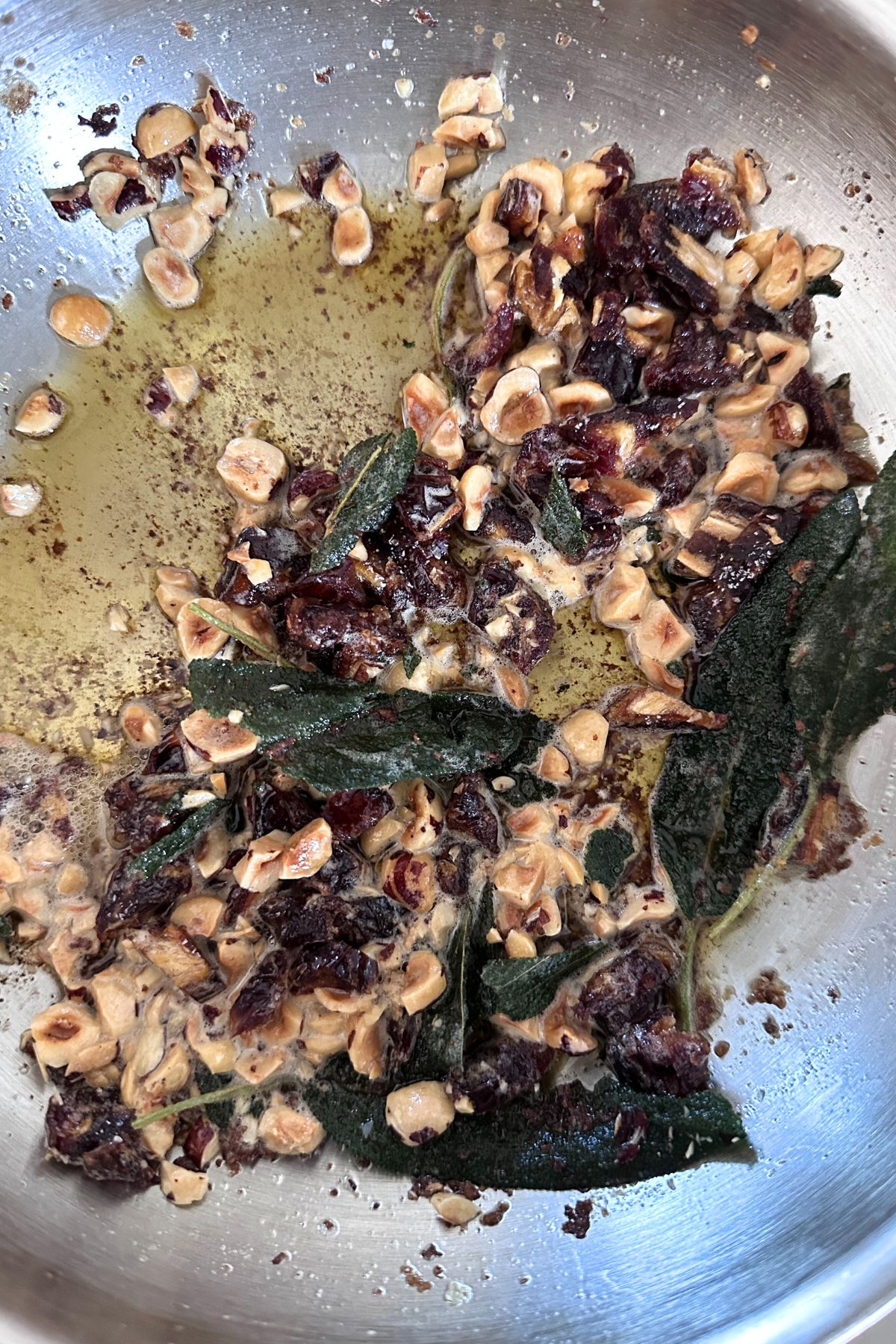
Step 4: While the squash roasts, make the sage brown butter. Melt the butter in a skillet over medium-low heat. You’ll know it’s ready when the foam subsides and the milk solids turn a light amber color. Add the sage leaves and stir until the butter smells nutty and the leaves crisp up, about 3 minutes. Turn off the heat, add hazelnuts and raisins, and stir for another minute. Season lightly with salt.
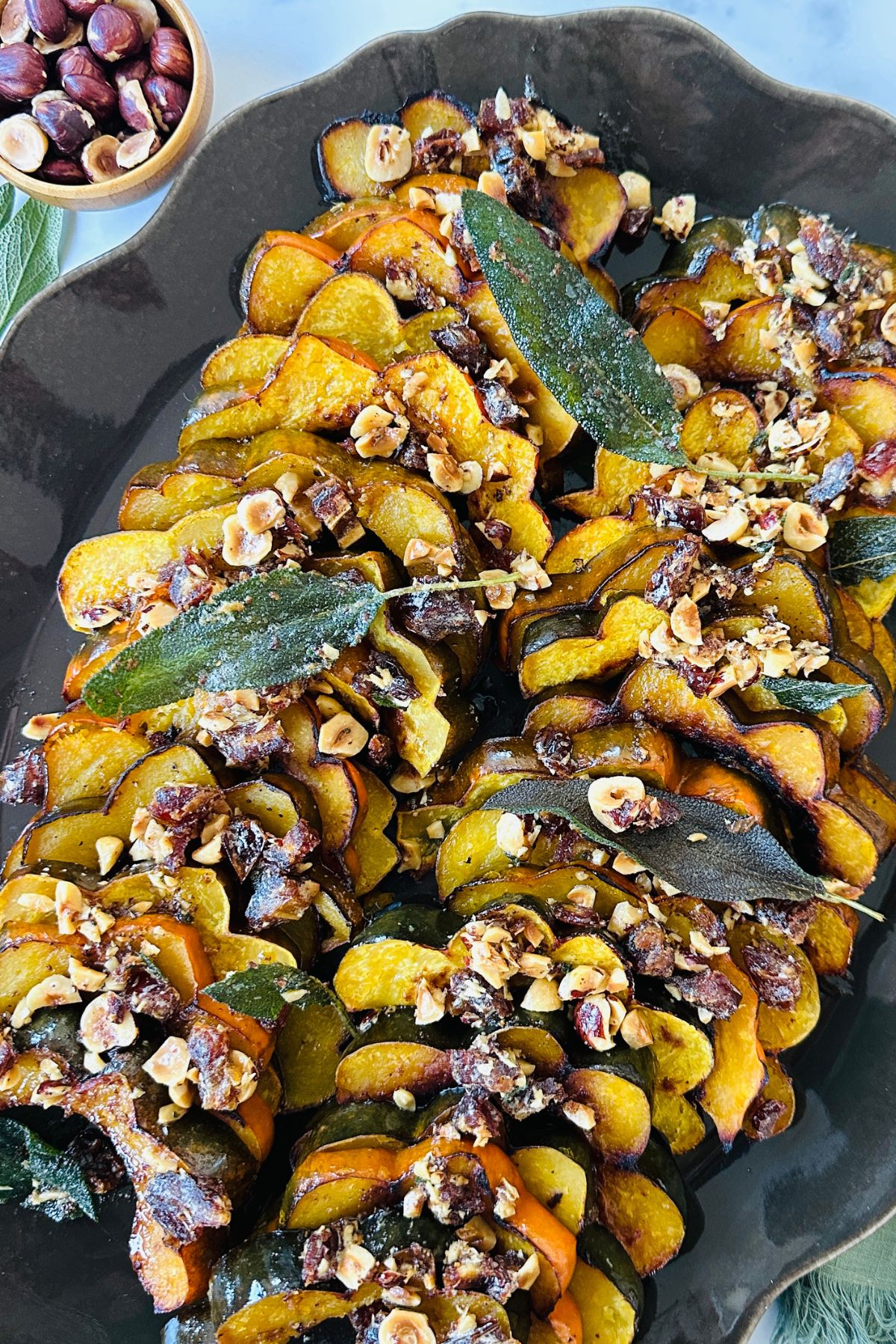
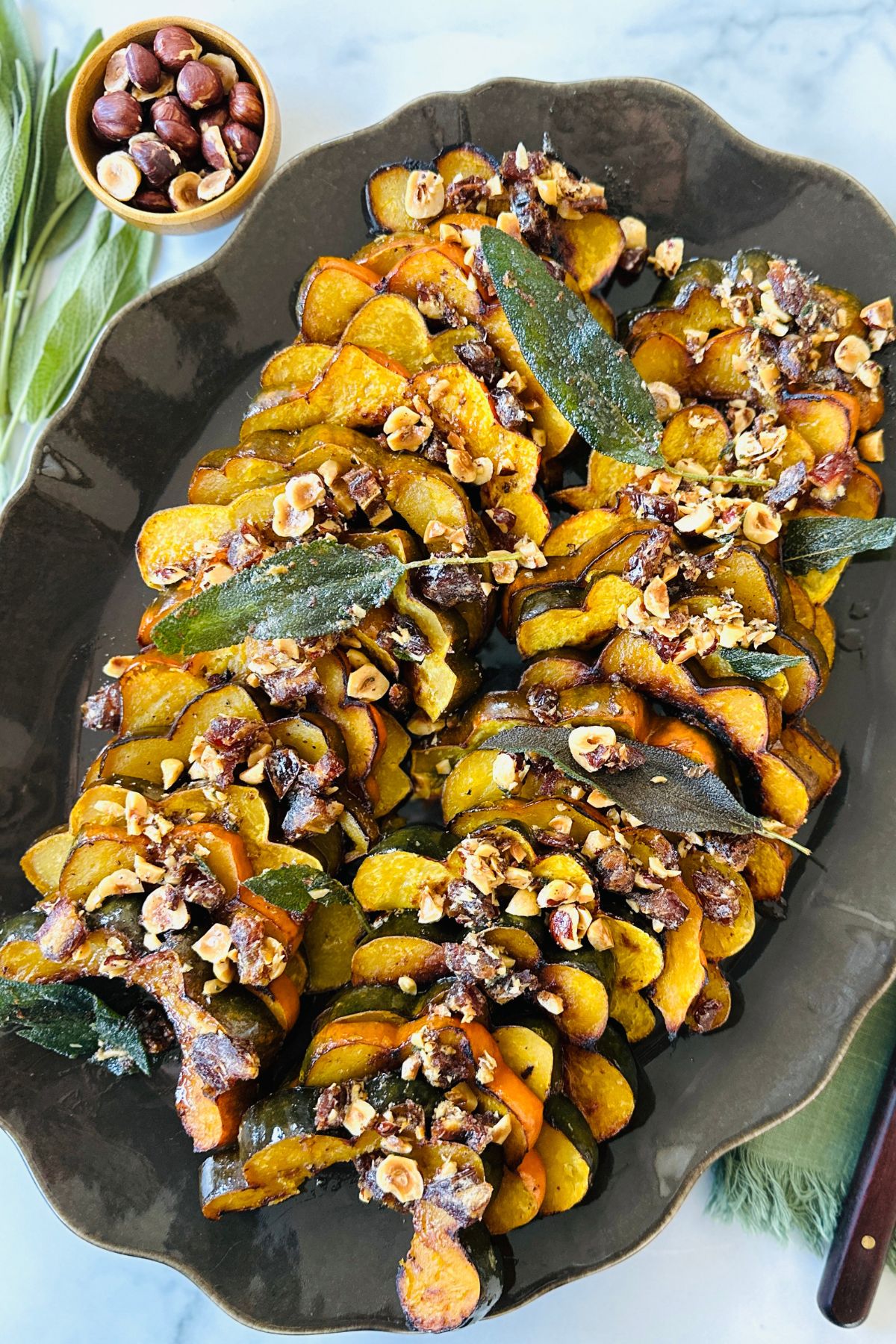
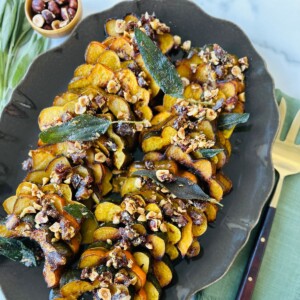
Step 5: Arrange the roasted squash on a platter and spoon the warm butter mixture over top. Serve right away so the butter pools beautifully around each piece.

Expert Tips
- High heat (450°F) is key for caramelization – it allows the natural moisture in the squash to evaporate quickly, concentrating the flavor and creating those delicious golden edges.
- For even deeper flavor, drizzle the squash with a touch of leftover brown butter before serving. It brings out the maple’s caramel notes and keeps the edges crisp.
- If you like mastering the art of roasting, check out my Roasted Vegetable Salad for another way to turn simple produce into something crave-worthy.
Storage and Make-Ahead Tips
- You can roast the squash a day ahead, then reheat at 375°F for 10-15 minutes until the edges are once again crisp and golden.
- Store leftovers in an airtight container for up to three days. The brown butter mixture can be refrigerated separately and warmed gently before serving.
- This dish pairs wonderfully with roasted poultry, grain bowls, or seasonal salads. Try it alongside quinoa with citrus vinaigrette or spooned over hearty greens for a lighter fall meal. You can even chill leftovers and serve them at room temperature for a make-ahead side.
Recipe FAQs
No need! The skin softens in the oven and is completely edible. Leaving it on helps the slices hold their shape.
Yes. Roasted acorn squash halves are a great option for stuffing or serving as individual portions. Add 10-15 minutes to the cook time.
Avoid overcrowding the pan. Give the wedges space to roast, not steam, for caramelized edges.
Absolutely. Swap the butter for plant-based butter and the result will still be rich, nutty, and delicious.
It’s a perfect fall side dish with roasted poultry, grain bowls, or other oven roasted vegetables like Brussels sprouts or carrots.
This maple roasted acorn squash with sage brown butter is the kind of side dish that never fails to impress. It’s simple, seasonal, and the perfect balance of sweet, savory, and nutty flavors – the very best of autumn cooking.
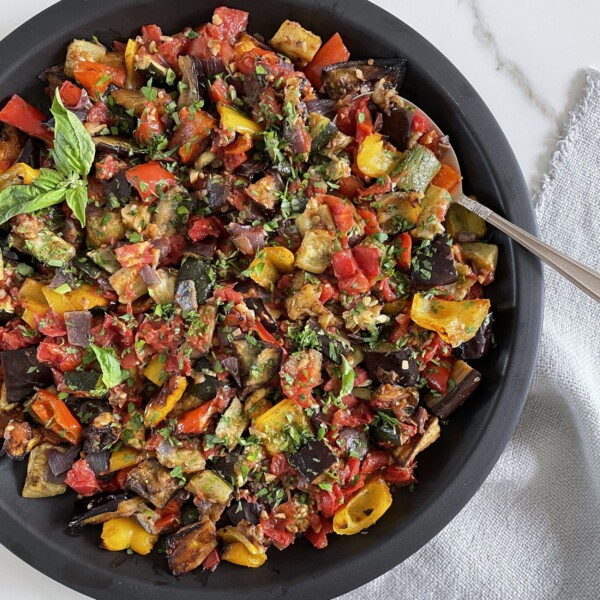
Looking for more cozy vegetable inspiration? You might enjoy my Roasted Ratatouille next.
More Sides to Explore
If you give this roasted acorn squash recipe a try, snap a pic and tag @pamelasalzman so I can see your beautiful creations. I also really appreciate readers taking the time to leave a star rating and review! I have started a weekly Monday newsletter with tips, musings, new recipes not published here, fun new finds, and more. Subscribe for free here.
For more delicious recipes and to learn how to be a better cook, check out my monthly online cooking classes. I have been teaching people for 15 years how to cook healthy food that their families love! Join me!
Roasted Acorn Squash with Brown Butter and Sage
Ingredients
- 2 medium-sized Acorn squash, halved, seeds removed, and cut into ¾ -inch slices or wedges
- 2 Tablespoons olive oil or coconut oil or avocado oil
- 2 Tablespoons maple syrup
- Salt and pepper to taste
- 4 Tablespoons unsalted butter or plant butter
- 4-5 fresh sage leaves, or 6-8 smaller sage leaves
- ¼ cup chopped skinned hazelnuts
- ¼ cup golden raisins or chopped pitted dates
Instructions
- To roast the squash: Preheat oven to 450 degrees. Line two half sheet pans or one ¾ sheet pan with unbleached parchment paper.
- Trim hard stem from each squash. Halve squash lengthwise, and scoop out seeds and cut squash crosswise (for a pretty scalloped edge) or lengthwise into ¾-inch wide wedges.
- Toss squash with 2 Tablespoons oil and syrup in a bowl then arrange cut sides down on prepared pans. Sprinkle with ¾ teaspoon salt and black pepper to taste.
- Roast squash, switching position of pans halfway through roasting, until squash is tender and undersides of wedges are golden brown, 25 to 35 minutes.
- While the squash is roasting, make the brown butter sauce. Melt the butter in a medium skillet over medium-low heat. Cook until the milk solids at the bottom are barely golden. Add the sage leaves then continue cooking, stirring frequently, until the butter is golden brown and fragrant, about 3 minutes. Turn off the heat, add in the chopped hazelnuts and golden raisins, continue stirring for another minute to ensure that the butter doesn’t burn. Season with a pinch of salt.
- Arrange the roasted squash on a large platter and spoon the warm brown butter, sage, hazelnuts, and raisins over top. Serve immediately.
Notes
- High heat (450°F) is key for caramelization – it allows the natural moisture in the squash to evaporate quickly, concentrating the flavor and creating those delicious golden edges.
- For even deeper flavor, drizzle the squash with a touch of leftover brown butter before serving. It brings out the maple’s caramel notes and keeps the edges crisp.
- You can roast the squash a day ahead, then reheat at 375°F for 10-15 minutes until the edges are once again crisp and golden.
- Store leftovers in an airtight container for up to three days. The brown butter mixture can be refrigerated separately and warmed gently before serving.
 Like this recipe? Rate & comment below!