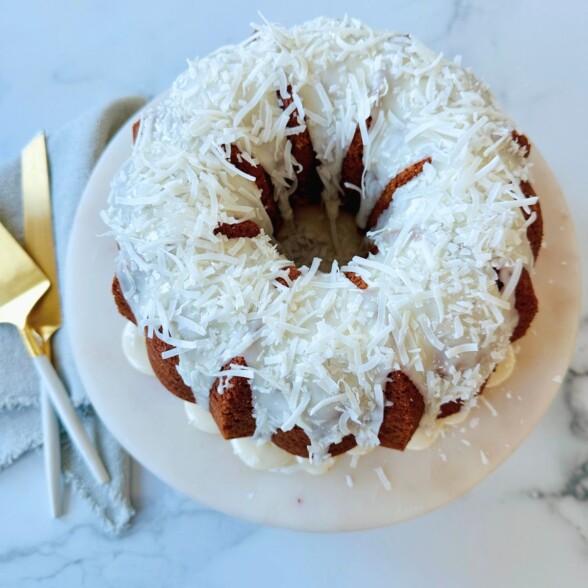
Why You’ll Love This Coconut Bundt Cake Recipe
This coconut bundt cake is inspired by the one my mom used to make when I was a child–simple, moist, and full of coconut flavor! Unlike many coconut cakes that lean overly sweet or heavy, this one is light and slightly sweet, making it just as perfect for breakfast or an afternoon snack as it is for dessert.
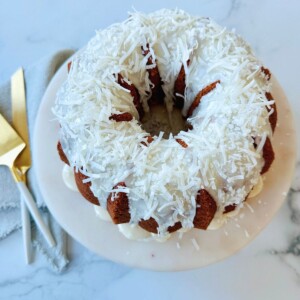
Just like in my olive oil yogurt cake and olive oil apple spice cake, I prefer to use oil instead of butter in this recipe because it coats the flour proteins more evenly, creating a tender crumb that stays moist for days. Whole-milk yogurt adds moisture and a subtle tang, and a drizzle of coconut glaze with toasted coconut takes it over the top. Bundt cakes are one of my favorite desserts to bake because they’re beautiful without requiring layers or complicated decorating. If you’ve made my apple cider pumpkin bundt cake or whole grain chocolate bundt cake, you already know how reliable and simple this style of cake can be.
If you would like to try the viral “Tom Cruise”-style coconut cake, you can swap the glaze for a white chocolate version made with melted white chocolate and heavy cream for an extra-rich finish.
Ingredients You’ll Need
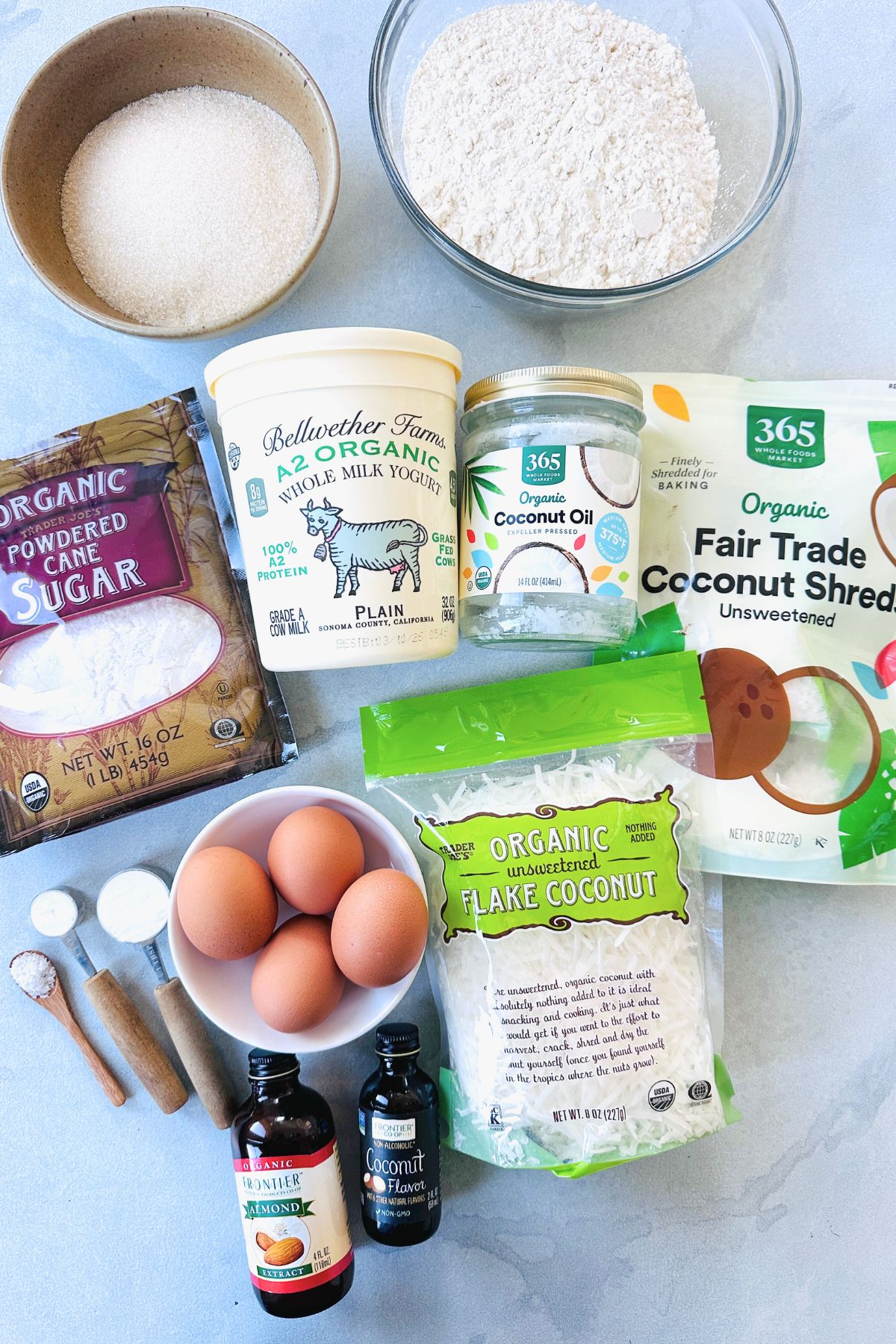
- All-purpose flour (or gluten-free flour blend): Provides structure and stability while keeping the crumb tender.
- Baking powder: Helps the cake rise and creates a light, even texture.
- Baking soda: Reacts with the yogurt to give the cake additional lift and tenderness.
- Sea salt: Balances the sweetness and enhances the coconut flavor.
- Cane sugar or maple sugar: Sweetens the cake without overpowering it, allowing the coconut to shine.
- Eggs: Provide structure, richness, and help emulsify the batter for a smooth crumb.
- Coconut oil (or neutral oil): Keeps the crumb incredibly tender and ensures the cake stays moist for days.
- Plain, unsweetened whole-milk yogurt: Adds moisture and a slight tang that balances sweetness while supporting a tender texture.
- Coconut extract: Intensifies coconut flavor without adding sweetness.
- Almond extract: Adds subtle depth and enhances the overall flavor.
- Finely shredded unsweetened coconut: Distributes evenly for consistent coconut flavor throughout.
For the Glaze:
- Powdered sugar: Creates that classic smooth bundt drizzle.
- Milk, water, or coconut milk: Thins the glaze to the perfect pourable consistency.
- Yogurt, melted coconut butter, or melted white chocolate: Adds richness so the glaze sets beautifully.
- Toasted unsweetened coconut flakes: Add texture and a nutty, toasty finish.

Substitutions
This is the best bundt cake recipe because it is flexible, and there are several easy swaps you can make depending on your needs.
- Butter instead of coconut oil: You can substitute 1 cup (2 sticks) of softened butter for the coconut oil. Using an electric mixer, beat the butter and sugar together until light and fluffy, about 4 minutes. Add the eggs and blend until uniform, then mix in the yogurt and extracts before incorporating the dry ingredients.
- Gluten-free: Use an equal amount of your favorite gluten-free flour blend. I’ve had the best results with King Arthur Multi-Purpose Gluten-Free Flour. I also recommend adding 1 teaspoon xanthan gum to help improve structure and texture.
- Dairy-free: Most dairy-free yogurts will work well here. Choose one with a consistency similar to full-fat dairy yogurt and a comparable fat content. I often use cashew yogurt, and oat milk yogurt would also be great. Sheep’s milk yogurt, while still dairy, is another lovely option if you tolerate it.
- Egg-free: You can try replacing the eggs with ¾ cup applesauce plus ½ teaspoon baking soda. Another option is to whip 5 tablespoons of aquafaba with 1 teaspoon cream of tartar until it forms a stiff foam, then gently fold it into the batter at the final step.
How to Make Coconut Bundt Cake
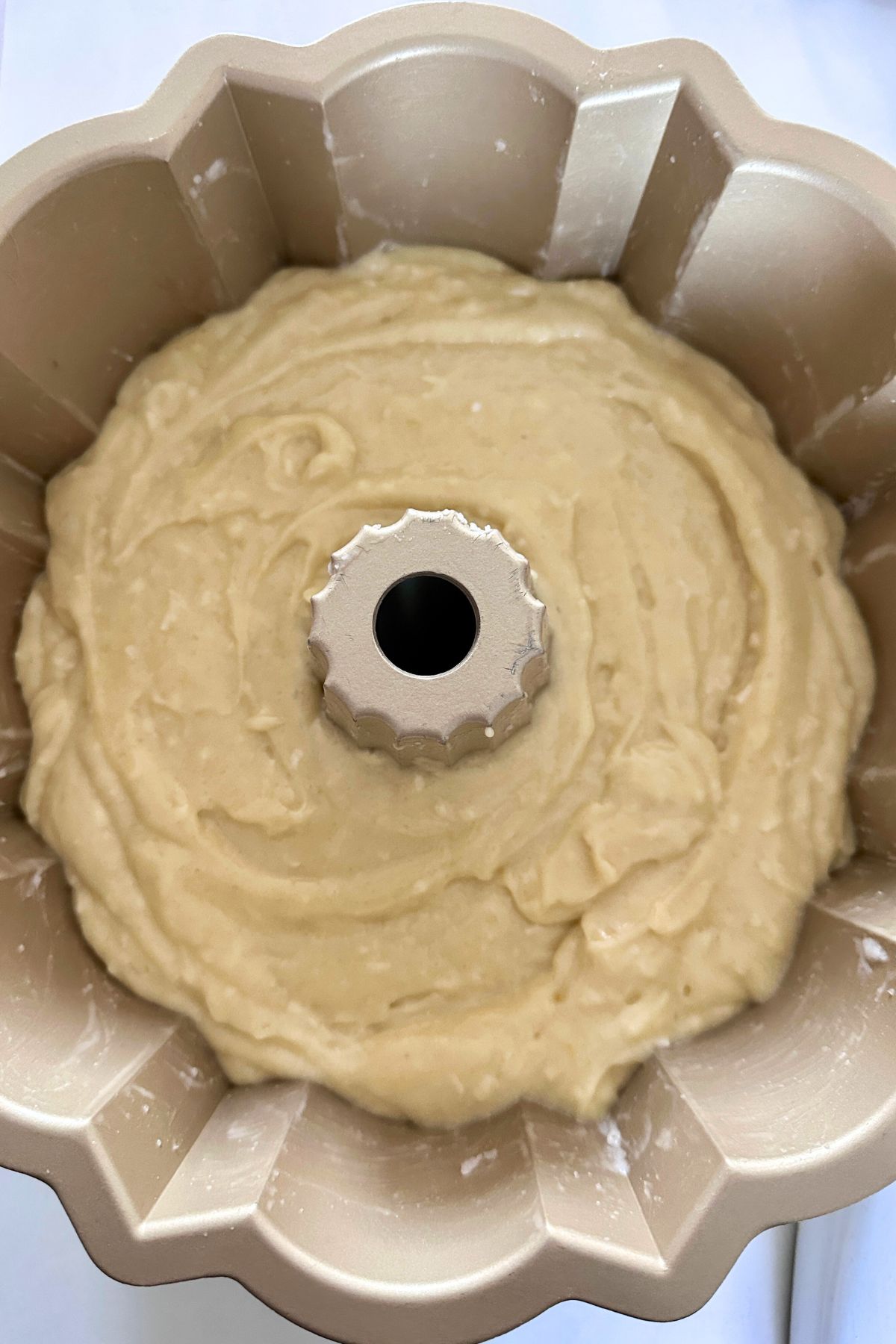
Step 1: Position the oven rack in the center and preheat to 350°F. Grease a Bundt pan thoroughly with coconut oil. (Use a pastry brush to get into every crevice – this step is crucial. Bundt pans have many curves, and missing even one spot can cause sticking.) In a medium bowl, whisk together the flour, baking powder, baking soda, and salt.
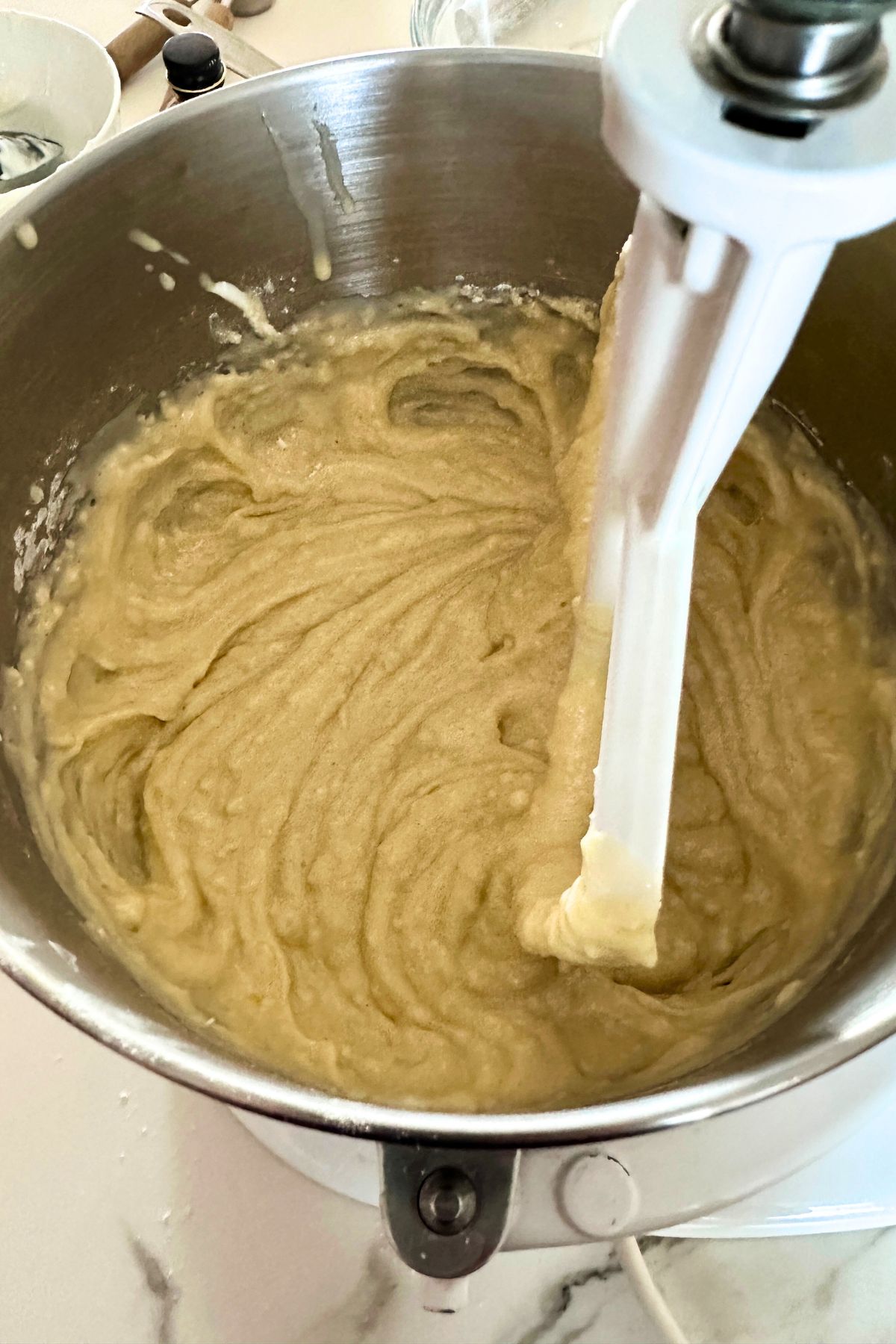
Step 2: In a large bowl, whisk the sugar and eggs and beat on medium speed until emulsified and the sugar has dissolved. Slowly whisk in the oil. Stir in the yogurt and extracts until smooth. Add the dry ingredients and stir until almost combined. Fold in the shredded coconut just until no visible flour remains.
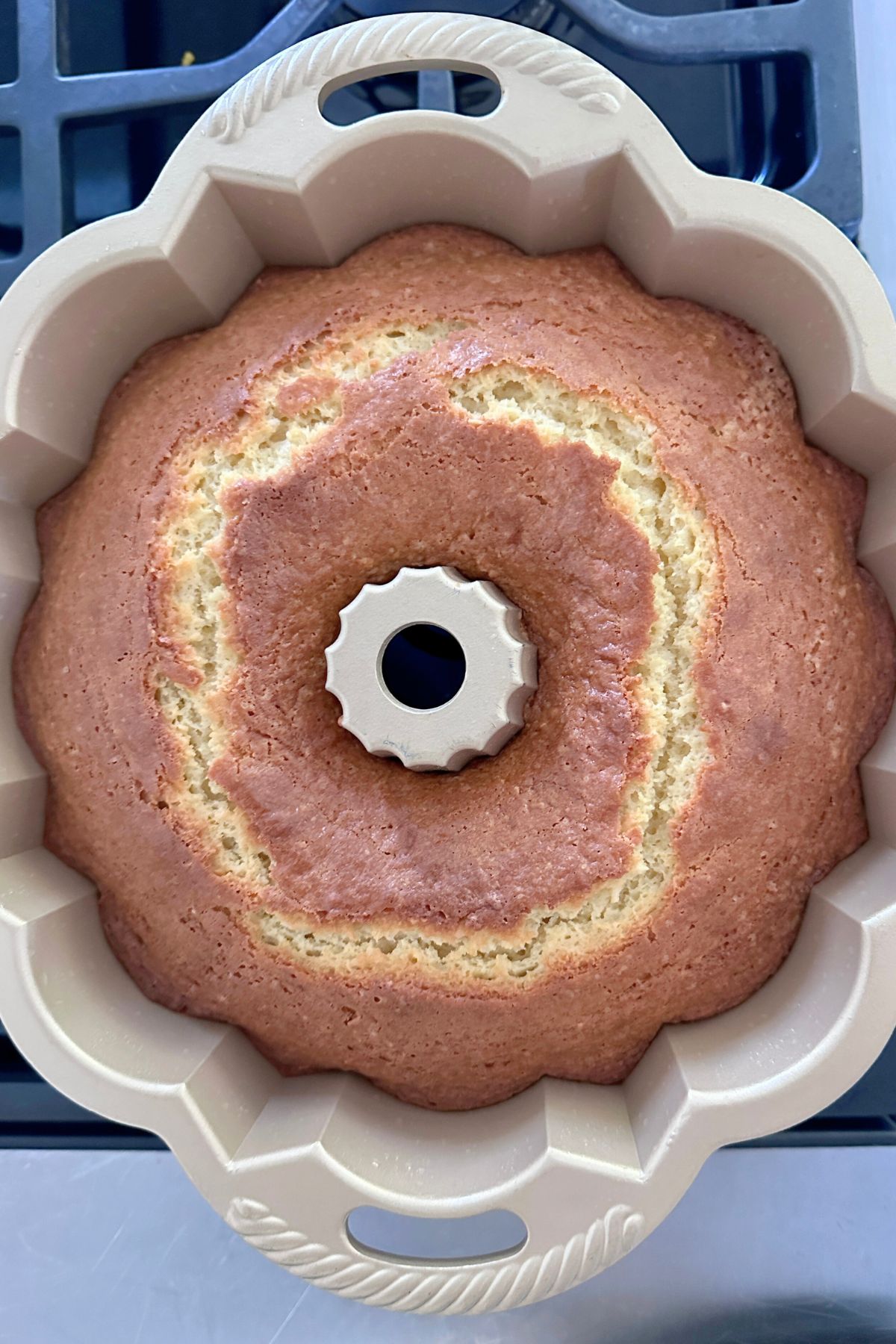
Step 3: Pour the batter into the prepared pan and smooth the top. Bake until golden brown and a skewer inserted in the center comes out clean, 40 to 50 minutes. I baked mine for 42 minutes.
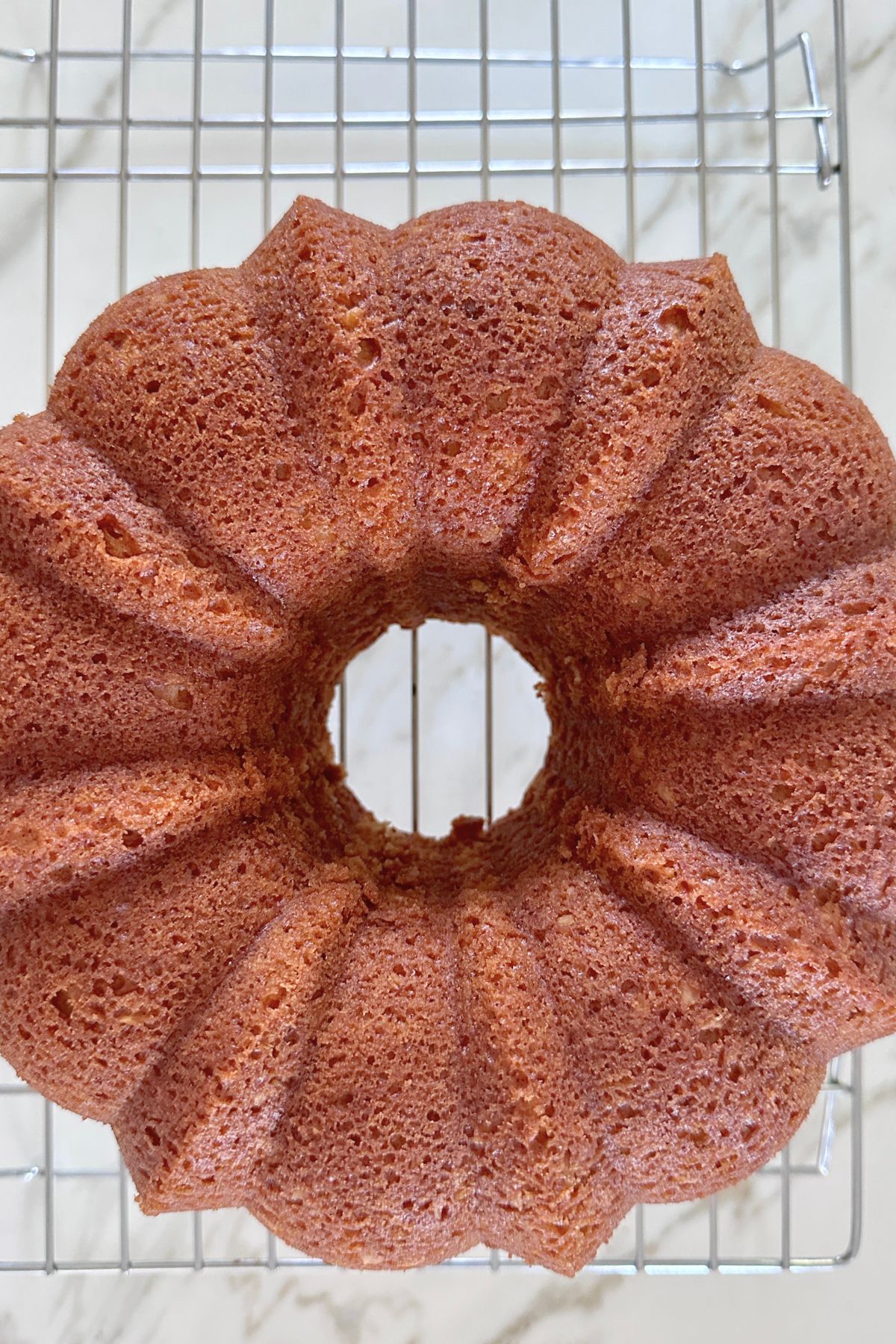
Step 4: Allow the cake to cool in the pan for 10 minutes – not longer. Cooling briefly helps it set, but waiting too long can cause sticking as steam creates moisture against the pan. Run a thin knife around the edges and inner tube, then carefully invert onto a wire rack to cool completely.
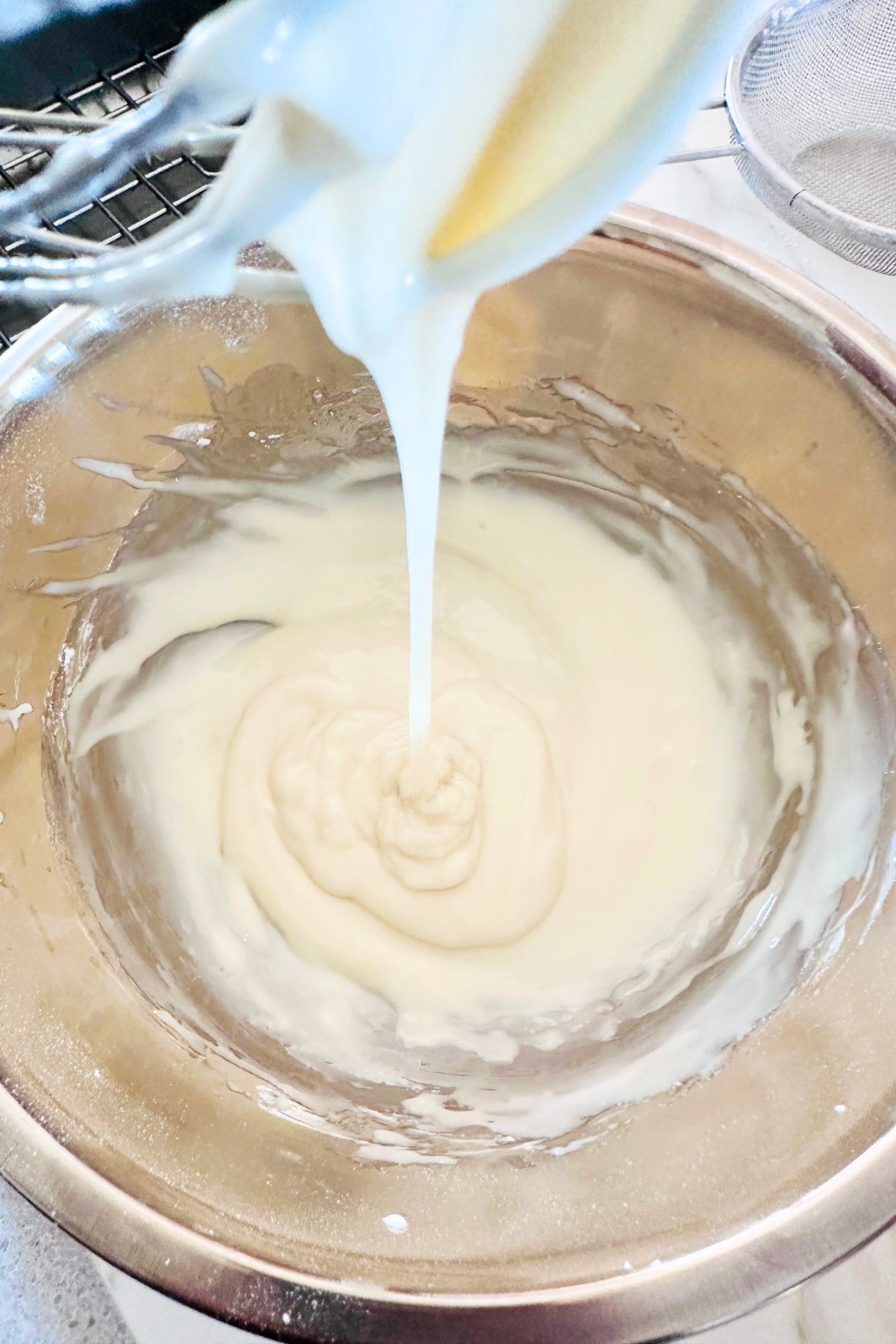
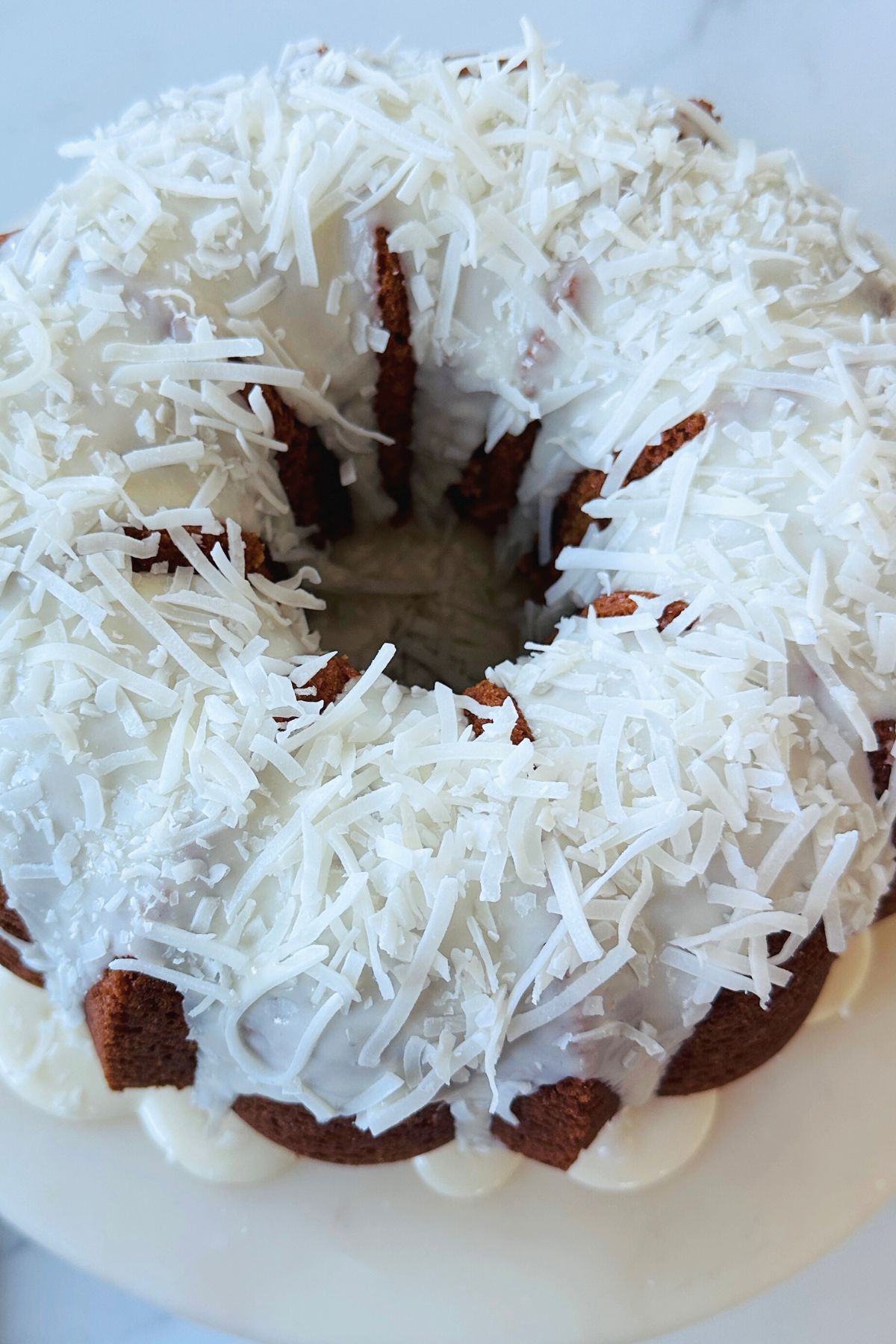
Step 5: Whisk together the glaze ingredients until smooth. The glaze should be thick but pourable. Drizzle over the cooled cake and sprinkle with toasted coconut. The glaze will firm as it sits.
For a more indulgent variation inspired by the viral “Tom Cruise” coconut cake, you can top the cake with a white chocolate glaze made from 6 ounces of melted white chocolate and ¼ cup of heavy cream.
Expert Tips
- Grease thoroughly. Use a pastry brush to coat every curve and crevice of the Bundt pan. This is the best insurance against sticking!
- Use room temperature ingredients. Eggs and yogurt blend more smoothly into the batter and help create an even crumb.
- Don’t overmix. Once you add the dry ingredients, stir just until combined to keep the texture tender.
- Cool for exactly 10 minutes. Turning the cake out too soon or too late can cause it to break or stick.
- Toast the coconut flakes. A quick toast in a dry skillet deepens flavor and adds a subtle crunch to the finished cake.
Storage and Make Ahead Tips
- You can also freeze the unglazed cake, tightly wrapped, for up to two months.
- Store loosely covered at room temperature for up to a week. Thanks to the oil and yogurt, the crumb stays soft and tender longer than many traditional butter cakes.
Recipe FAQs
Grease every crevice thoroughly with oil using a pastry brush. Let the cake cool for 10 minutes, then loosen with a thin knife before inverting.
Overbaking is the most common cause of a dry cake. Check at 40 minutes and remove when a skewer has just a few moist crumbs. The oil and yogurt help prevent dryness, but baking too long will still dry it out.
Yes, you can use sweetened shredded coconut, but it will increase the overall sweetness of the cake. If you prefer a more balanced flavor, reduce the sugar slightly to compensate.
This coconut bundt cake is the kind of recipe that feels nostalgic and dependable all at once. I love serving it for spring brunches, but I also love having a slice with coffee in the afternoon when it’s been sitting on the counter for a day or two – somehow it tastes even better. If you make it, I’d love to hear how it turns out for you!
More Delicious Cake Recipes
If you give this coconut bundt cake recipe a try, snap a pic and tag @pamelasalzman so I can see your beautiful creations. I also really appreciate readers taking the time to leave a star rating and review! I have started a weekly Monday newsletter with tips, musings, new recipes not published here, fun new finds, and more. Subscribe for free here.
For more delicious recipes and to learn how to be a better cook, check out my monthly online cooking classes. I have been teaching people for 15 years how to cook healthy food that their families love! Join me!
Easy Coconut Bundt Cake Recipe
Ingredients
- Coconut oil or butter for greasing the pan
- 3 cups all-purpose flour or GF flour
- 1 Tablespoon aluminum-free baking powder
- 1 teaspoon baking soda
- 1 teaspoon sea salt
- 1¼ cups cane sugar or maple sugar
- 4 large eggs, at room temp
- 1 cup coconut oil, melted and cooled but still liquid or a neutral oil*
- 1 ¼ cups plain, unsweetened whole-milk yogurt
- 1 teaspoon coconut extract, optional but adds great coconut flavor
- ¼ teaspoon almond extract
- ½ cup finely shredded unsweetened coconut
Coconut Glaze
- 2 –4 Tablespoons water or milk, can use coconut milk or any plant milk
- ½ teaspoon coconut extract to taste
- 1 Tablespoons plain, unsweetened whole-milk yogurt or slightly melted coconut butter or melted white chocolate
- 2 cups powdered, confectioners’ sugar, sifted if clumpy
- ½ cup toasted unsweetened coconut flakes
For the, "Tom Cruise" White Chocolate Glaze:
- 6 ounces white chocolate, melted + ¼ cup heavy cream
Instructions
- Position oven rack so that the bundt pan will be in the center of the oven and preheat oven to 350 degrees F. Grease a Bundt pan with coconut oil. I like to use a pastry brush to get into all the crevices.
- In a medium bowl, whisk together the flour, baking powder, baking soda, and salt.
- In a large bowl, whisk the sugar and eggs and beat on medium speed until emulsified and the sugar has dissolved. Whisk in oil slowly, and then stir in the yogurt and extracts.
- Stir the flour mixture into the wet ingredients until almost combined. Then stir in the shredded coconut until there is no visible flour.
- Pour batter into prepared pan and smooth the top with a spatula. Bake until cake is golden brown and a wooden skewer inserted into the center comes out clean, 40 to 50 minutes. I baked for 42 minutes
- Allow the cake to cool in the pan for 10 minutes, then run a thin knife around all the edges, including the inner tube. Carefully invert the cake onto a wire rack to cool completely.
- Once cool, make the glaze by whisking the milk, yogurt, and powdered sugar in a medium bowl until smooth. You can add more milk gradually, if needed. The glaze should be thick, but still pourable. You can test the consistency by scooping some of the glaze with the whisk and drizzling it over the bowl. When the cake is completely cool, transfer cake to a serving dish and drizzle all of the glaze over the cake. I like to pour the glaze along the top of the cake and it will naturally drip down the sides of the cake. Sprinkle top with toasted coconut. The glaze will firm up as it sits. This cake can be stored loosely covered at room temperature for up to a week.
Notes
- Butter instead of coconut oil: You can substitute 1 cup (2 sticks) of softened butter for the coconut oil. Using an electric mixer, beat the butter and sugar together until light and fluffy, about 4 minutes. Add the eggs and blend until uniform, then mix in the yogurt and extracts before incorporating the dry ingredients.
- Gluten-free: Use an equal amount of your favorite gluten-free flour blend. I’ve had the best results with King Arthur Multi-Purpose Gluten-Free Flour. I also recommend adding 1 teaspoon xanthan gum to help improve structure and texture.
- Dairy-free: Most dairy-free yogurts will work well here. Choose one with a consistency similar to full-fat dairy yogurt and a comparable fat content. I often use cashew yogurt, and oat milk yogurt would also be great. Sheep’s milk yogurt, while still dairy, is another lovely option if you tolerate it.
- Egg-free: You can try replacing the eggs with ¾ cup applesauce plus ½ teaspoon baking soda. Another option is to whip 5 tablespoons of aquafaba with 1 teaspoon cream of tartar until it forms a stiff foam, then gently fold it into the batter at the final step.
- Grease thoroughly. Use a pastry brush to coat every curve and crevice of the Bundt pan. This is the best insurance against sticking!
- Use room temperature ingredients. Eggs and yogurt blend more smoothly into the batter and help create an even crumb.
- Don’t overmix. Once you add the dry ingredients, stir just until combined to keep the texture tender.
- Cool for exactly 10 minutes. Turning the cake out too soon or too late can cause it to break or stick.
- Toast the coconut flakes. A quick toast in a dry skillet deepens flavor and adds a subtle crunch to the finished cake.
- Store loosely covered at room temperature for up to a week. Thanks to the oil and yogurt, the crumb stays soft and tender longer than many traditional butter cakes.
- You can also freeze the unglazed cake, tightly wrapped, for up to two months.
 Like this recipe? Rate & comment below!